dyyseo
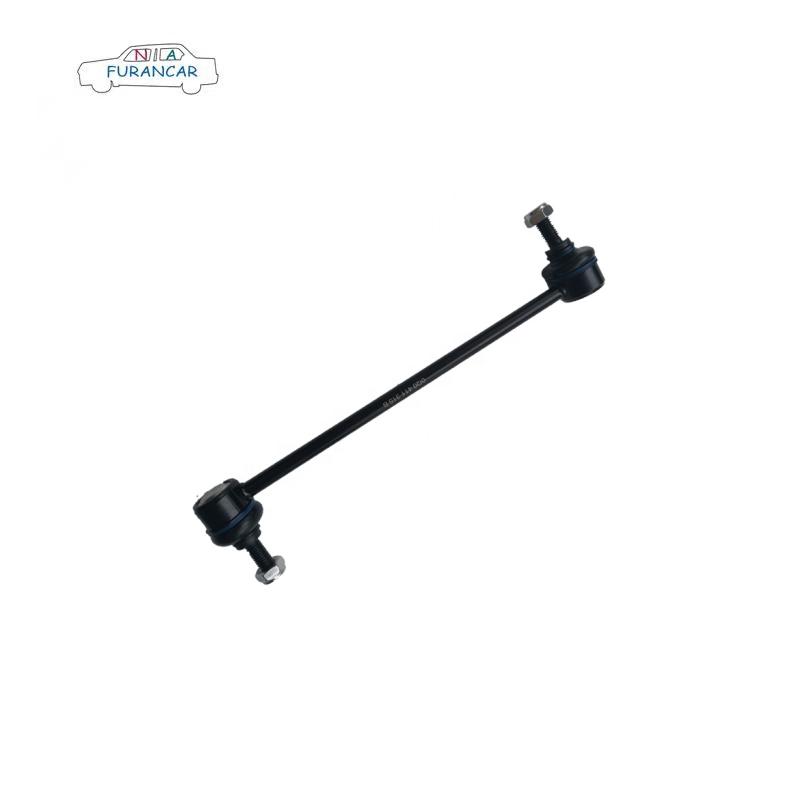
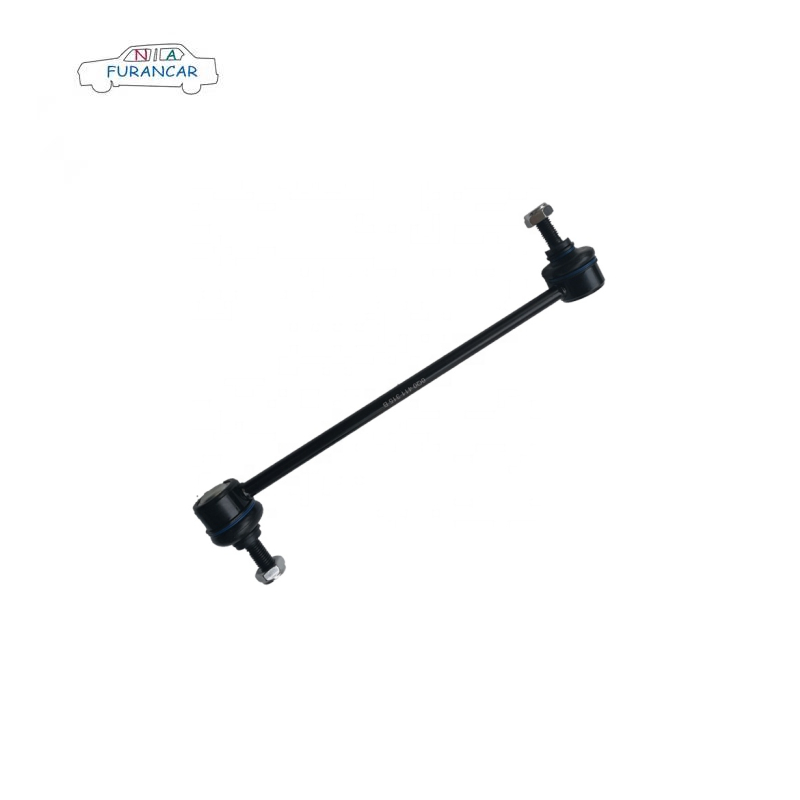
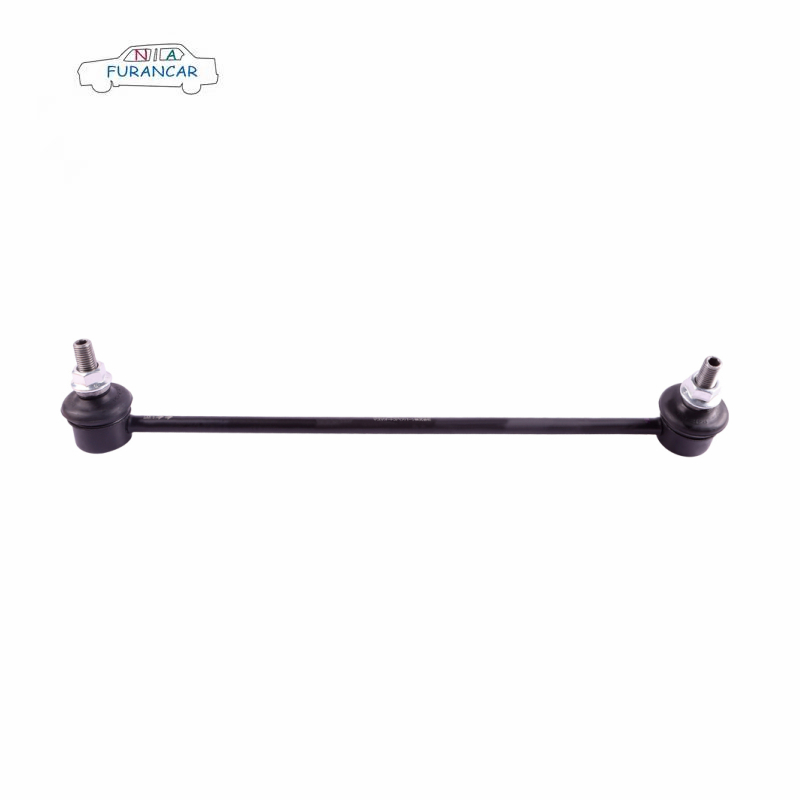
Front Stabilizer Link

Can I replace sway bar links myself?

Can I replace sway bar links myself?

1. Loosen the wheel lug nuts. Loosen them slightly, but do not remove.

2. Jack up/lift the car. You will need to jack the car by placing the jack under the suspension arm so it compresses the suspension and relieves the tension on the link. (See your manual for proper jacking procedures and safety)
3. Remove the lug nuts and the wheel.
4. Identify the bad link.
5. Remove the nut holding the sway bar link to the sway bar. You will have to grip the shaft below the sway bar so it does not turn - for example pair of vice grip locking pliers. The bottom bolt you can use a socket wrench on the nut, and a wrench on the nut on the other side of the mounting point
6. Install the new link. Simple insert the lower part first, then the upper. Be sure it is installed the same as the original - the bushings are touching the sway bar - from the top: nut, metal washer, bushing, sway bar, bushing, metal washer. The lower link is simply nut, mounting point, smaller nut.
7. Tighten the nuts. When tightening the nuts, again you will need to use a socket wrench on the bottom on the larger nut, regular wrench on the smaller nut. Be sure to use the correct sizes so they do not strip/become damaged. On the top, a socket wrench and vice grips so the shaft does not spin
8. Compress the bushings about half. The bottom part should be tightened so the two nuts are against both sides of the mounting point so it has no free-play.
9. Replace the wheel and lug nut. Do this after everything is tightened on the link, make sure you have all your tools.
10. Finished.

阅读全文......
How does a sway bar differ from a sway link?

How does a sway bar differ from a sway bar link ?

Sway bars and links are found in ATVs, forklifts, racing cars and family cars – basically any type of vehicle with a suspension.


Maintaining a vehicle in an upright position during a turn is vital to safety. The parts within a suspension system that help to control this movement are the sway bars and sway links. A sway bar is a long steel tube or bar that runs across the front and back of a vehicle. The bar allows the suspension to flex depending on the angle of the turn forcing one side of the vehicle to raise or lower to offset the turn on the opposite side.

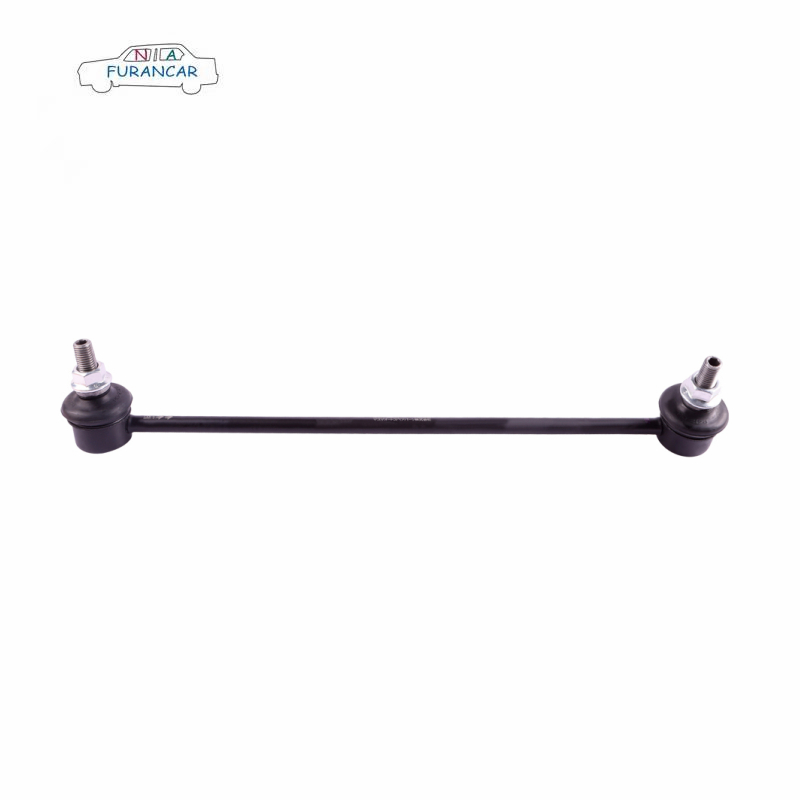
A sway link, sometimes referred to as a dog bone, connects the sway bar to the a-arms in the front of a vehicle and in the back suspension. Generally, there are four sway links in every application – one for each wheel. These links hold the vehicle flat in a turn to prevent the vehicle from flipping over. Given their role in preventing rollovers, sway links must be precisely engineered for each application.

Knowing when to replace a sway link is just as important as its initial selection. When sway links wear, they make a clunking noise and tension loosens between the sway bar and the a-arms.

阅读全文......

Is there any danger when the balance bar ball head is broken?

Is there any danger when the balance bar ball head is broken?
If the ball head of the balance bar breaks, there will be a certain safety hazard. Because the ball head of the balance bar is broken, it will lead to the deviation of the car direction. The breaking of the ball head of the balance bar will have the following effects:
1. Different tread patterns on both sides or different tread depth and height.
2. Uneven tire pressure on both sides will make the tire different in size, which will inevitably produce deviation when rolling.
3. The front shock absorber is faulty. After the failure of the front shock absorber, when the vehicle is running, a high and a low two suspension are not evenly stressed, resulting in running deviation.
If the ball head of the balance bar breaks, the following phenomena will occur:
1. Abnormal noise will be heard from the front of the vehicle when the vehicle is traveling at low speed or the road surface is rotten.
When parking, if you step on the brake slightly, there will be a “click”.
3. When auto starts, the front wheels of the car will make a clunking sound as it accelerates.
There are several ways to determine whether the balance ball head is damaged:
1. Press the front end in place to see if there is any abnormal noise. If there is abnormal noise, there is a problem.
2. Hold the head of the balance pole and shake it to see if you can shake it. If it shakes, there’s something wrong, because it doesn’t shake properly.

阅读全文......

The role of Stabilizer Links

Stabilizer links act as components of auto suspensions, connecting several other parts that take much of the punishment as you pass over pot holes and other road imperfections.  
Function  
Modern cars use segmented suspensions. Stabilizer or sway bars have stabilizer links. The stabilizer bar holds pairs of wheels connected, while stabilizer links hook this larger piece with arms that go up to the wheels themselves. Ball joint connections enable turning and suspension travel.  

Significance  
Stabilizer bars links improve handling and shock absorption, keeping the car from swaying too much as you turn–which could lead to loss of control. Adding stabilizer links between the main bars and the wheels refines this process of control, so cars handle “tight.”  

Types  
With the prevalence of pot holes and bumpy roads, your entire suspension needs to withstand shocks, so stabilizer links employ cast iron, steel and alloy in their construction. Most have at least one ball joint for connecting with adjacent suspension components. A minority of stabilizer links lack ball joints altogether. Japanese and European car makers often employ this flat type.  

Identification  
You can identify stabilizer links by looking for ball jointed metal connections next to the wheels.Mechanics may refer to them simply as ball joints. Related but different parts of the suspension, such as idler and Pitman arms, can be found at the center of the undercarriage below your steering wheel. Most stabilizer links measure around 10 to 15 inches.  

Effects  
Worn stabilizer links affect steering, ride and fuel efficiency. Symptoms include a creaking or screeching noise as you pass road imperfections, plus wobble, skip and “dead zones” in steering. Don’t overlook these signs, as broken stabilizer links can lead to loss of control.  

阅读全文......

WHY DOES MY SWAY BAR LINK BREAK?

To figure out why your sway bar link breaks, it's first important to understand how sway bars work. The sway bar, also known as an anti-roll bar or stabilizer bar, is a vital part of your vehicle’s suspension system and keeps it level during cornering. Sway bars are usually a long and hollow arched steel bar attached to the chassis, connecting the left and right sides. This stabilizes your vehicle while still allowing the suspension to move on its own.

Sway bar links are what connect the outer end of the sway bar to the suspension component. Because the sway bar itself is a torsional swing, the sway bar link smooths the motion transfer between the sway bar and the control arm. The sway bar link maintains the camber angle of the inner wheels to control motion.

Like many automotive parts, over time the sway bar links will wear out. Water intrusion that leads to rust, age, and lack of lubrication all contribute to deterioration over time. A knocking noise from your suspension, rattling sounds while taking corners and hitting bumps, and excessive body roll are signs it may be time for a replacement. Sway bars and their components are all paramount to driver safety.

阅读全文......