dyyseo

Common Shock /struts Absorber Questions(3)

Common Shock /struts Absorber Questions

12. Why do I need to replace worn shocks or struts?


In a nutshell: To keep the vehicle’s stability within its designed capability. Stability means keeping the body as level as possible during bumps, turns and stops, while keeping the tyres on the road under all conditions. The shock’s main function is to resist body & tyre movement, but as shocks wear the vehicle becomes unstable; the steering feels less responsive, the body leans more and the tyres grip less. Stopping ability can be reduced as much as 23% and the driver needs more skill to keep the vehicle on the intended path and from losing control on curves. Shocks cycle about 1000 times per Km driven. After 80,000 Km, that’s 80 million cycles.Because shocks use metal discs that flex with each movement, they become fatigued over time which causes the reduced performance, which is why replacement shocks and struts are suggested after 80,000 kilometres.


13. What is the difference between shock absorbers and struts?


The function is essentially the same, but the largest difference is the way they mount to the vehicle. The strut design acts an integral part of the suspension by replacing the upper control arm and acting as a pivot point for the steering. The shock design is used in addition to the suspension and steering components.


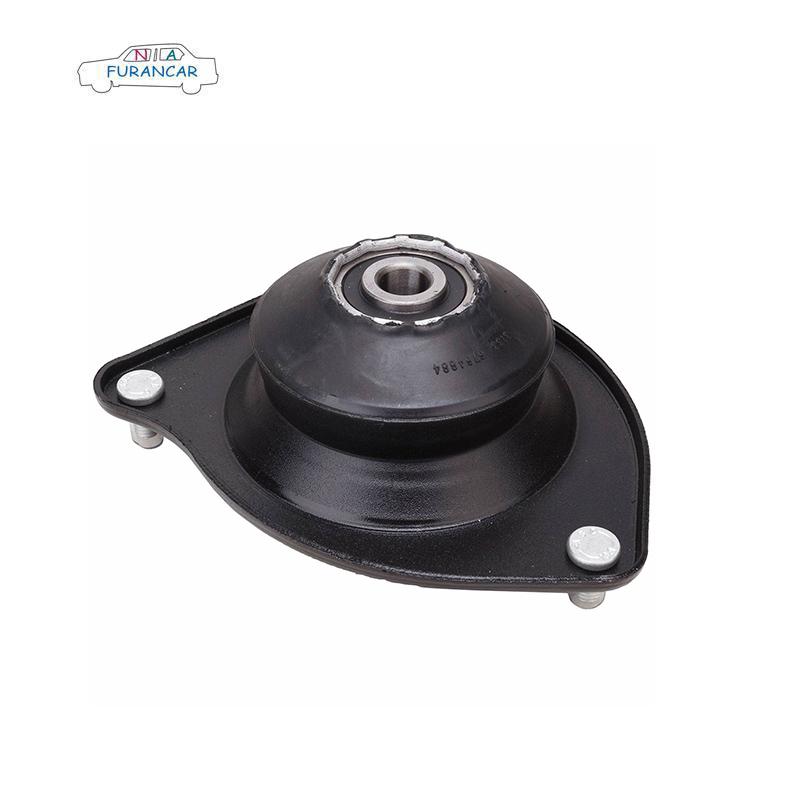
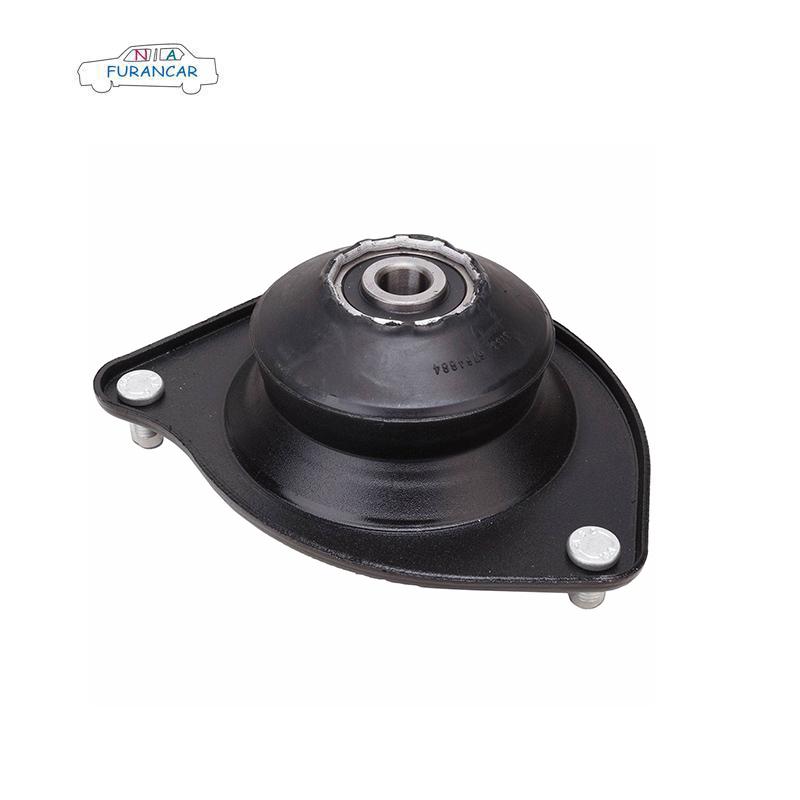
14. Do the strut mounts come with the bearings?

Many do, but only when the strut mount is also the steering pivot. The bearing is a wear item and affects the steering response as well as wheel alignment.


15. Why should replacement spring always be fitted in axle pairs?

Although one spring may have broken and requires replacing, the other springs will be fatigued, and failure may be imminent. As with shock absorbers, replacing just one spring will result in an unbalanced axle which will manifest itself with uneven braking and handling.


16. Why do I need to check suspension geometry after fitting new springs?

As springs fatigue and sag, caster, camber, toe and the turning circle are affected, therefore, a full geometry check after fitting new springs will reduce wear in tyres, track rod ends etc.


17. Why are coil springs which come off a vehicle often longer than the new springs supplied as replacements?

Because the old springs have become coil bound. They have stopped returning to their original height following extensive compression.

阅读全文......

Does the Shock absorber need to be replaced with both?

Does the Shock absorber need to be replaced with both? Does Shock absorber damage require immediate replacement?  

The Shock Absorber tends to age and harden over time, leading to damage. The average car has two Shock absorbers. Do you need to replace both of them if one breaks? In fact, only one Shock absorber is damaged and can be replaced separately, but it is better to replace both when replacing them. That’s because while the Shock absorber isn’t damaged, it can wear and tear over time. Changing just one Shock absorber can lead to uneven support on both sides of the Shock absorber, affecting its original performance.

If the shock absorber is broken, do you need to replace it immediately?

First, when the Shock absorber is damaged, the Shock absorber will make a strange noise when it is working, and the car’s direction may be slightly deflected, making it difficult and ineffective to return to normal. At the same time, the Shock absorber loses its basic cushioning effect, transferring the absorbed Shock and Shock from the frame to the driver’s cab as it works, and the steering wheel makes a noticeable noise when it is moved. All told, the impact of Shock absorber damage is significant and should be replaced in a timely manner.

阅读全文......

How does a sway bar differ from a sway link?

How does a sway bar differ from a sway bar link ?

Sway bars and links are found in ATVs, forklifts, racing cars and family cars – basically any type of vehicle with a suspension.


Maintaining a vehicle in an upright position during a turn is vital to safety. The parts within a suspension system that help to control this movement are the sway bars and sway links. A sway bar is a long steel tube or bar that runs across the front and back of a vehicle. The bar allows the suspension to flex depending on the angle of the turn forcing one side of the vehicle to raise or lower to offset the turn on the opposite side.

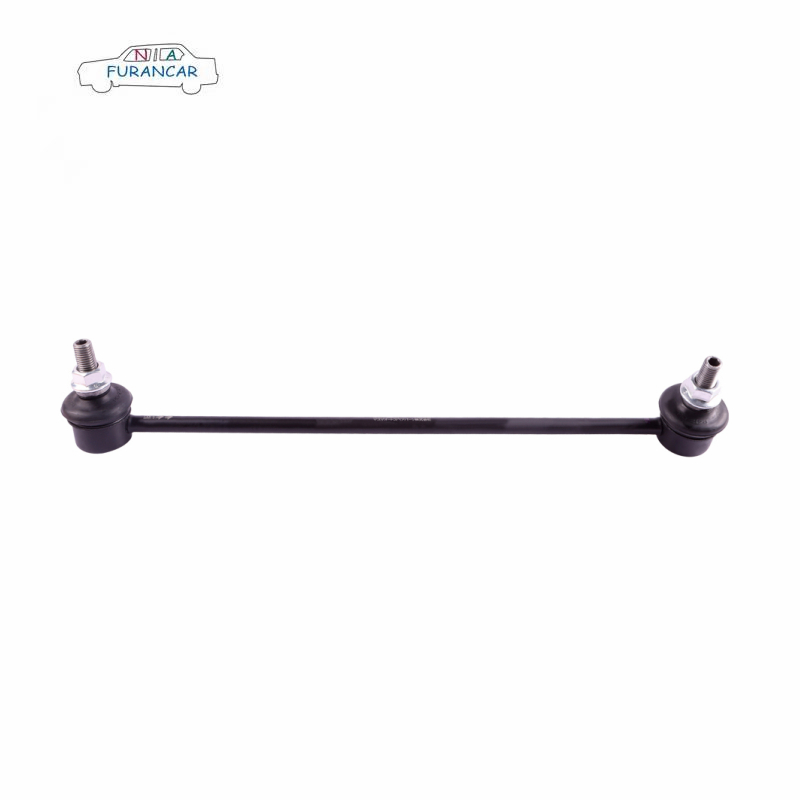
A sway link, sometimes referred to as a dog bone, connects the sway bar to the a-arms in the front of a vehicle and in the back suspension. Generally, there are four sway links in every application – one for each wheel. These links hold the vehicle flat in a turn to prevent the vehicle from flipping over. Given their role in preventing rollovers, sway links must be precisely engineered for each application.

Knowing when to replace a sway link is just as important as its initial selection. When sway links wear, they make a clunking noise and tension loosens between the sway bar and the a-arms.

阅读全文......

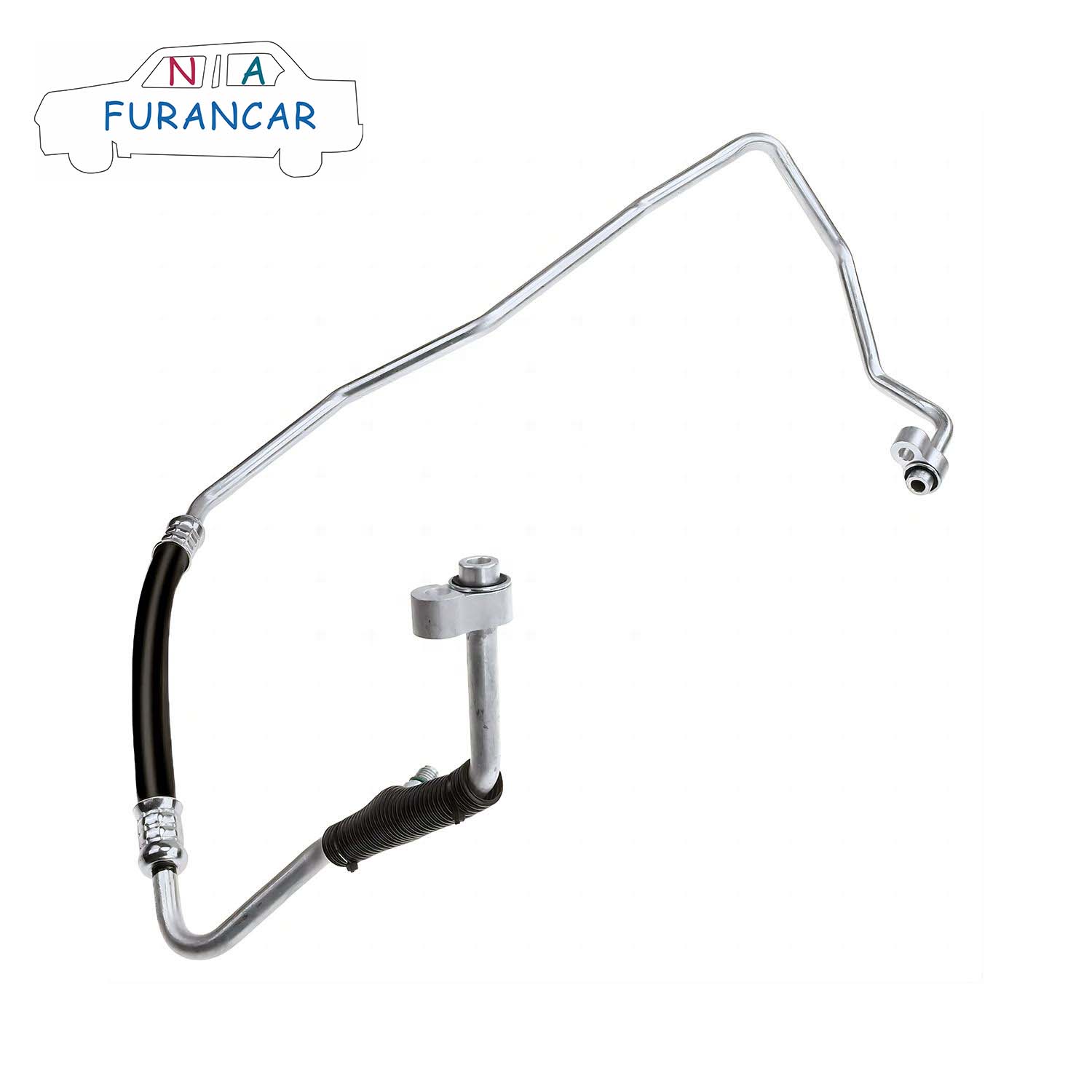
How to Make an Emergency Power Steering Hose Repair

How to Make an Emergency Power Steering Hose Repair 


Ever had a power steering hose spring a leak and you are in the middle of nowhere, there is a parts store but your part isn't available. I will show you a quick and easy way to repair a power steering hose. 
Determine leak location: You have established you do have a power steering hose leaking, you can turn the steering wheel with the engine running and power steering fluid will spray out the hole in the hose, you may need an assistant for that part. You may also need to jack up the vehicle to see where it is leaking from. Set parking brake and use blocks or jack stands for safety after lifting vehicle. You may have to add fluid to an empty power steering pump to locate the leak. 
Cut the hose: After you have determined where the leak is, then remove the bad spot in the hose.   
Install the hose clamps: Install the hose clamps 2 on each side, Stagger hose clips against each other. This allows you to get them closer together and have more clamping force on the splice. Slide in the brass coupling, install the hose clamps on the other end of the hose and slide the hose into the coupling. Make sure you slide it all the way on. 
Tighten the clamps as tight as you can get them without stripping the clamps out, put the hose back into position in the vehicle. Fill the power steering tank and recheck for leaks, if you have made a successful repair the power steering will work and you won't lose a drop of fluid. 

阅读全文......

How to repair noisy control arm bushing?

How to Repair a Noisy Control Arm Bushing If the bushing is just loose, then it is either knocked loose or installed incorrectly.
Chances are, you can save this bushing just by tightening it.
However, in most cases your bushing will wear out and you will have to replace it.
Either way, you should take your vehicle to an auto body professional who can perform this repair or replacement job for you.
It's not a good idea to ignore the jingle or knock, as this can cause a steering failure and you will no longer be able to control the direction of the vehicle.
It is best to resolve the issue as early as it is convenient for you.

阅读全文......

Is there any danger when the balance bar ball head is broken?

Is there any danger when the balance bar ball head is broken?
If the ball head of the balance bar breaks, there will be a certain safety hazard. Because the ball head of the balance bar is broken, it will lead to the deviation of the car direction. The breaking of the ball head of the balance bar will have the following effects:
1. Different tread patterns on both sides or different tread depth and height.
2. Uneven tire pressure on both sides will make the tire different in size, which will inevitably produce deviation when rolling.
3. The front shock absorber is faulty. After the failure of the front shock absorber, when the vehicle is running, a high and a low two suspension are not evenly stressed, resulting in running deviation.
If the ball head of the balance bar breaks, the following phenomena will occur:
1. Abnormal noise will be heard from the front of the vehicle when the vehicle is traveling at low speed or the road surface is rotten.
When parking, if you step on the brake slightly, there will be a “click”.
3. When auto starts, the front wheels of the car will make a clunking sound as it accelerates.
There are several ways to determine whether the balance ball head is damaged:
1. Press the front end in place to see if there is any abnormal noise. If there is abnormal noise, there is a problem.
2. Hold the head of the balance pole and shake it to see if you can shake it. If it shakes, there’s something wrong, because it doesn’t shake properly.

阅读全文......

Power Steering Hose Method of inspection

Power Steering Hose Method of inspection 
1. Where visible (without the removal of reservoir cap), check the power steering fluid level in the reservoir. 
2. 
Check the condition of power steering pipes and hoses. 
3. 
With the front road wheels on the ground, vehicle in neutral gear and the parking brake applied, run the engine and rock the steering wheel in both directions. 
Check: a. by feel at the steering wheel, that the system is operating b. for leaks in the system c. that feed pipes are free from damage and are not chafing on other parts of the vehicle. 
4. In the case of external power systems check: a. the ram anchorages for cracks, damage and security to the frame or other fixed members of the vehicle b. the ram for cracks and/or damage c. for movement indicating wear at the anchorage point d. misalignment or fouling of components. 
5. With the engine stopped and steering wheel lightly rocked, check for excessive free play between ball-pin and valve. 
Where practicable, check the security of the power steering pump and the condition of its drive system. 
7. 
Check for any inappropriate repair or modification to power steering system components. 

阅读全文......

Power steering tubing is blocked

Power steering tubing is blocked


Power steering fluid leaks – The first and most common reason to consider with respect to why you are not getting enough power from your power steering is you may have one or more leaks in your system. You constantly have fluid being forced through your power steering hoses at high pressure, so it is not at all surprising that one of those could at some point spring a leak. If this is your problem, you will need to replace your power steering fluid and find ways to stop the leaks from causing you to lose fluid in the future. 

Power steering pump – Your power steering pumps are what force the power steering fluid through the system to create the hydraulic pressure you need. Even if you have enough power steering fluid in the system, if the pump isn’t working properly, you will not get adequate power steering. It’s hard to know if your problem is being caused by a fluid leak or a worn out pump, although some signs of pump problems are a humming or whining noise when you try to steer and the fact that your power steering fluid reservoir is relatively full even though you are not getting power steering. If this is your problem, you will need to replace the pump, so you want to exhaust all other possibilities before assuming that this is the source of your power steering issues. 
Clogs in the power steering system – A rarer problem that can lead to loss of power steering is a clog in your power steering system. In some cases, rust from worn components or contaminants from dirty power steering fluid can combine to create a block of debris that restricts the flow of power steering fluid through your system. If this happens, you will not get the pressure you need for your power steering to work properly. Clogs can be hard to diagnose as they are very difficult to locate in the system. 
Air in the power steering system – A related problem to a clog — although with different causes — is air in your power steering system. The more air there is in your power steering fluid, the less liquid there is available to create hydraulic pressure. This can be a deceptive problem because you may not notice a particularly low level of liquid in your reservoir, leading you to believe you have a pump problem. Fortunately, the same solutions that you try for a fluid leak can be tried for air in the system, because it is usually caused by loose seals or bad O-rings that allow air to leak into the system. 

阅读全文......

Rarely Discussed, Yet Crucial:A Detailed Explanation of the Power Steering System

When reviewing the specification sheet, have you noticed an entry labelled ‘Power Steering Type’? Common options in this section include mechanical hydraulic power steering, electronic hydraulic power steering, and electric power steering. What exactly does ‘Power Steering Type’ refer to? What do these three variants represent? What are the differences and respective advantages and disadvantages of each method?


We've all experienced it firsthand: when the engine isn't running, even with all your strength, it's incredibly difficult to turn the steering wheel. Just imagine – can you really expect to effortlessly manoeuvre something weighing nearly two tonnes? To tackle this issue, a system known as power steering was developed. As the name suggests, its purpose is to assist you in turning the wheel. Currently, the market primarily offers three types of power steering: mechanical hydraulic power steering, electronic hydraulic power steering, and electronic power steering.


1.Mechanical hydraulic power steering

Mechanical hydraulic power steering systems typically comprise components such as a hydraulic pump, oil lines, pressure and flow control valve bodies, drive belts, and reservoir tanks. The operating principle involves the hydraulic pump generating oil pressure to actuate a piston, thereby producing an auxiliary force that drives the steering linkage to assist wheel turning. Vehicles equipped with this system often exhibit heavier steering feel and increased engine load during low-speed, wide-radius turns. Due to the high pressure generated by the hydraulic pump, the power steering system is also more susceptible to damage. Mechanical hydraulic power steering systems are commonly employed in most economy saloon cars.


2.Electronic Hydraulic Power Steering


Primarily comprising a reservoir tank, power steering control unit, electric pump, steering gear, and power steering sensor, the electronic hydraulic power steering system employs an electrically driven electric pump, wherein the power steering control unit and electric pump form an integrated assembly. This system enables smoother cornering and driving by calculating the optimal steering assistance based on signals such as vehicle speed and steering angle, as determined by the electronic control unit. The electronic hydraulic power steering system is currently the most widely adopted power steering system.


3.Electric Power Steering (EPS)

Generally comprising a steering sensor, electronic control unit, electric motor, reduction gear, mechanical steering gear, and power supply, the specific configuration may vary. The absence of hydraulic components such as the hydraulic pump, hydraulic lines, and steering column valve body results in a simpler structure. Under the control of the electronic control unit, the vehicle can readily achieve variable assistance functionality. This means greater assistance energy and lighter steering at lower speeds, while reduced assistance energy and heavier steering are provided at higher speeds. When no steering input is required, the system remains inactive, entering a dormant state awaiting activation. Such power steering systems are commonly found in premium saloon cars, and an increasing number of vehicles are now adopting this form of steering assistance.


Power steering fluid, being subjected to continuous extreme pressure and high-temperature conditions, will deteriorate and become contaminated over time, losing its lubricating properties. This leads to the formation of deposits such as varnish, causing steering difficulties and steering wheel vibration. The power steering system is crucial to our driving safety.


How often should power steering fluid be changed? While vehicle manufacturers do not strictly stipulate a replacement interval for power steering fluid, it is advisable to replace it every 40,000 to 50,000 kilometres or within 2 to 3 years to prevent contamination or degradation that could lead to further issues. Should inspection of the power steering system reveal the fluid level below the minimum mark, a noticeable thinning of the fluid, or a darkening of its colour, replacement should be carried out immediately.


Finally, a word of caution to many motorists who habitually substitute gearbox oil for steering fluid: this practice is not recommended. The two fluids differ in viscosity, molecular structure and function, and may damage the steering mechanism. While the effects may not be immediately apparent, the internal rubber seals within the steering unit will deteriorate, leading to persistent oil leakage. The steering system is crucial for driving safety, reducing the effort required to turn the wheel and ensuring a smoother driving experience. Therefore, regular maintenance and inspection are absolutely essential!


Different types of power steering systems require distinct maintenance approaches. For mechanical hydraulic systems, routine checks must prioritise ensuring the power steering reservoir remains adequately filled with steering fluid. Additionally, avoid holding the steering wheel at full lock for extended periods. Regularly monitor whether steering feels excessively heavy or produces unusual noises. Should such symptoms arise, promptly inspect components such as the oil pump V-belt and internal pressure levels. For electro-hydraulic systems, routine checks on power steering fluid levels remain crucial; immediate investigation is required whenever the warning light illuminates. Regarding electric power steering systems, despite their relatively simple construction, maintenance demands more than visual inspection. Should steering become unresponsive or exhibit heavy operation, diagnostic instruments become essential for accurate measurement.


阅读全文......

Shock absorber assembly is distinguished from shock absorber

Shock absorber assembly is distinguished from shock absorber

1. Different constituent structures

The shock absorber is only part of the shock absorber assembly; The shock absorber assembly is composed of shock absorber, lower spring pad, dust jacket, spring, shock absorber pad, upper spring pad, spring seat, bearing, top glue and nut.

2. Different difficulty of replacement

The replacement of independent shock absorbers is difficult to operate, requiring professional equipment and technicians, and the risk factor is large; Replacing the shock absorber assembly is a simple matter of turning a few screws.

3. Price difference

It is expensive to replace each part of shock absorber set separately. The shock absorber assembly, which contains all parts of the shock absorber system, is cheaper than replacing all parts of the shock absorber.

4. Different functions

A separate shock absorber serves only as a shock absorber; The shock absorber assembly also plays the role of suspension pillar in the suspension system.

tips

Therefore, it is recommended to replace the shock absorber assembly directly, and the replacement of the shock absorber assembly is recommended to replace in pairs, in order to prevent the car from causing instability, serious words will also affect driving safety.

阅读全文......